
How Can Independent Visual Artists Find Grants and Build a First-Time Application?
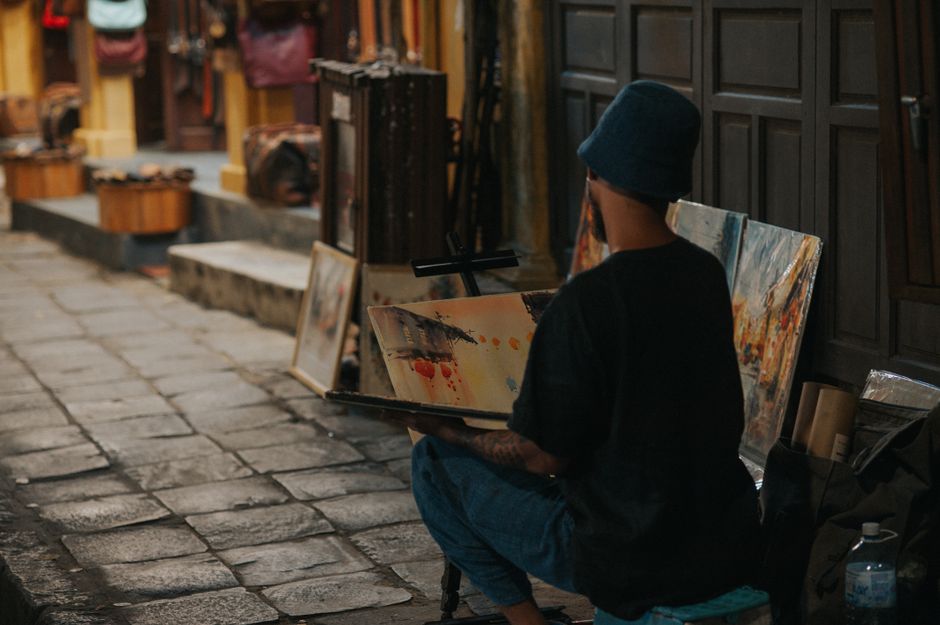
Independent visual artists find legitimate grants by checking each funder's location, career-stage, entity, and project rules before writing. Build the first application around one fundable project: a clear description, a balanced budget, a dated timeline, and recent work samples that match the proposal. Treat eligibility as the first draft. A strong project cannot rescue an ineligible application.
Where can independent artists find legitimate grants?
Independent artists should begin with official public arts agencies and established arts funders, then read the current guidelines before opening an application.
Start close to home. The Maryland State Arts Council offered eligible independent Maryland artists $2,500 through its FY2025 Grants for Artists program. Its rules require applicants to be at least 18 and Maryland residents for six months. Chicago's 2026 Individual Artists Program accepted requests up to $6,000 and anticipated 200 to 250 awards, with funding expected for about 15 to 20 percent of applicants.
State and city programs are not interchangeable. San Antonio's FY2026 artist grant offered $7,500 for individual artists and $15,000 for significant-scale, collective, or ensemble projects. Miami-Dade historically awards $1,650 to $10,000 through its Individual Artists program, with no matching requirement. Creative Capital's 2027 award lists unrestricted project grants from $15,000 to $50,000, yet it also requires at least five years of professional artistic practice and a minimum applicant age of 25.
Build a simple eligibility screen before drafting. Record the funder, residency rule, age rule, career requirement, applicant type, award amount, deadline, allowed costs, required samples, and submission stages. The search becomes smaller. The fit becomes clearer.
| Program | Applicant fit to check | Published award information |
|---|---|---|
| Maryland State Arts Council | Independent Maryland artist, age 18 or older, six-month residency | $2,500 in FY2025 |
| Chicago Individual Artists Program | Practicing Chicago artist, age 18 or older, applying as an individual | Requests up to $6,000 |
| San Antonio Artist Grant | Individual artist with required experience or training and local residence or studio | $7,500 for individual artists in FY2026 |
| Creative Capital | Artist age 25 or older with five years of professional practice | $15,000 to $50,000 for the 2027 award |
Do I need an LLC or nonprofit to apply for an art grant?
No. Some artist grants require the applicant to be an individual, not an LLC, nonprofit, or other entity.
Maryland states that entities including nonprofits, LLCs, institutions, and government agencies are not eligible for its Grants for Artists program. Chicago also requires applications from individuals rather than businesses or incorporated entities. If a program says “individual artist,” forming an LLC does not improve eligibility. It can end it.
The reverse rule also exists. The National Endowment for the Arts Grants for Arts Projects category is for nonprofit 501(c)(3) organizations, government units, and federally recognized tribes. Individuals and applications through a fiscal sponsor or agent are explicitly ineligible for that category.
Read the applicant definition word by word. Then apply as the person or organization the program names. Tax treatment is separate from eligibility: Chicago says its individual applicants must be able to receive funds as taxable income.
What should I include in an artist grant proposal?
An artist grant proposal should connect one project description to one timeline, one full budget, and work samples that prove you can carry out the work.
Name the work. State what will be made, where it will happen when a venue or public presentation is required, who will take part, and what the grant pays for. San Antonio asks applicants for a project description, implementation plan, value and impact, collaborators, venue, milestone timeline, promotion plan, and budget. Its capability score includes the timeline, budget, and promotion plan.
Write the budget after the narrative, then test both against each other. Chicago requires a complete budget for the entire project, not only the grant request. It must include all activity described in the narrative, list all income sources including pending funds, and show income equal to or greater than expenses. Creative Capital uses the same core test: income or funding should equal or exceed expenses.
A first-time proposal often fails through drift. The description promises an exhibition, the budget funds supplies alone, and the timeline never reaches installation. One project. One set of proof.
Include the items the funder requests, in its order:
- A short artist introduction, bio, or statement tied to the practice.
- A project description with a defined result.
- A milestone timeline that reaches completion or public presentation.
- A full income-and-expense budget with every cost explained.
- Current resume, required eligibility records, and matched work samples.
Maryland also requires evidence of sustained creative practice through a public website or social account, a current resume, and/or relevant work samples. Do not leave the spending plan vague. Its guidelines warn that an unclear or missing plan can make the application ineligible.
How much work should I include in my portfolio?
Include only the number and type of samples the program allows, then choose recent work that makes the proposed project feel like the next step in an existing practice.
More files do not create more proof. Miami-Dade permits visual artists up to 10 high-resolution images and expects samples completed within the prior three to five years. Its peer panels assess artistic merit, a sustained body of work, relevance and cohesion of the samples, and alignment between the proposed activity and the artist's practice.
Creative Capital is stricter by stage. Round I asks for one completed past-work sample. Artists advancing to Round II can submit up to two additional samples. For visual work, one image sample can contain up to five images of one work; later-round applicants can submit two five-image sets or one 10-image set. Promotional reels and pitch decks are not accepted.
Choose the clearest sequence. Lead with the work closest in medium, scale, process, or public form to the proposal. Use captions to identify the work, its date, and the role it plays in the practice when the application asks for that context. Do not use the portfolio to tell a different story from the proposal.
Frequently Asked Questions
Can emerging artists apply for grants without previous exhibitions?
Some programs support artists from early-career through advanced-career stages. Miami-Dade evaluates a sustained body of work and active practice through recent samples, while San Antonio requires three years of relevant experience or specialized training and a portfolio of publicly displayed or published work. Read each program's definition of professional practice before applying.
Why do art grant applications get rejected?
Applications can fail before panel review when they are late, incomplete, or ineligible. The NEA states that such applications are not reviewed, and Maryland warns that a missing or unclear spending plan can make an application ineligible. A proposal also loses force when its samples, budget, and timeline describe different projects.
Can I use grant money for studio rent, supplies, or artist fees?
It depends on the program's eligible-expense rules. Maryland's FY2025 Grants for Artists guidelines list studio or workspace costs, materials and supplies, and consultant or collaborator fees among eligible uses. A funder's list controls, so place each expense in the budget only after checking its current guidelines.
Sources
- Maryland State Arts Council, FY2025 Grants for Artists Guidelines
- City of Chicago Department of Cultural Affairs and Special Events, 2026 Individual Artists Program Guidelines
- Creative Capital Application Handbook
- City of San Antonio Department of Arts & Culture, FY2026 Artist Grant Request for Applications
- Miami-Dade County Department of Cultural Affairs, 2026-2027 Individual Artists Guidelines
- National Endowment for the Arts, Grants for Arts Projects Eligibility